dedh-ishqiya3

This is a strange scenario. I read review after review after review, every damn possible review of Dedh Ishqiya. Just to figure out one thing – to see if anyone has written about the homage scene in the film, and the inspiration behind the film’s spoiler, or scratched it beyond the surface. And i was extremely disappointed to see that not a single reviewer has mentioned it.

They didn’t get it?

They don’t know about it?

They haven’t read it?

Just because the director didn’t tell or it wasn’t mentioned in the press release?

Because, for me, that is the highlight of the film. The smartest scene in the film. And that *is* the film too. Strange. Seems like we are reading a group of philistines who have been raised on a limited staple diet and don’t know how to read a film beyond their radar. Not that such funny things has never happened in the past, but this should straight go to FunnyOrDie section. So which scene i am talking about?

SPOILER ALERT (Don’t read further if you haven’t seen the film yet and if you hate spoilers)

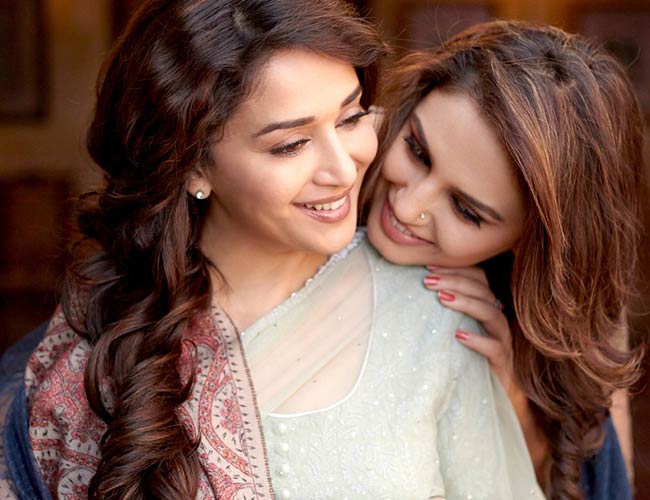
In the scene where both Naseer and Arshad’s hands are tied and they are watching Madhuri and Huma having fun, getting physical. Naseer looks at Arshad and says, Lihaaf maang le. Arshad looks up and smiles. And then we see just a big shadow on the wall which suggests physical intimacy between Madhuri and Huma’s characters. That’s the homage to Ismat Chughtai’s Lihaaf. The setting, Begum, homo-eroticism, huge shadow play – the elements and the incident is the same as in Lihaaf.

That’s not all, the entire back story of Madhuri’s husband is also from the same story. And the spoiler – their relationship and her back story is the core idea of the film. Rest of it has been just built up to cover this plot. So it can be called a really smart adaptation of the short story. Much respect for the writers of the film – Darab Farooqui, Abhishek Chaubey and Vishal Bhardwaj.

So why is it such a big fuss?

1. Because it involves Ismat Chughtai – one of the most eminent, progressive and feminist Urdu writers.

2. Because it involves Lihaaf (published in 1942) – the most popular and celebrated short story by Ismat Chughtai.

3. Because Lihaaf created a big controversy. Ismat Chughtai was charged with obscenity and was summoned by the Lahore court in 1944. She went to court, refused to apologise and won the case. Click here to read a funny excerpt about the case from her memoir. And if possible, do watch Naseer’s play on the same which also includes Manto’s trial.

4. And most importantly, because it’s still relevant. Chughtai’s story dealt with homo-eroticism and lesbianism which created a huge ruckus then. And today, when we are still debating gay rights and article 377 in India, a mainstream Hindi film brings the subject on the big screen with mainstream actors, and connects it so smartly to such an important and controversial literary work, and to its history. And we have no fucking clue! Lilaah!

Strangely, it seems most reviewers didn’t even get the historical, social, or literary context. If i was the boss, i would have surely asked for some explanation, rejection, and resignation. Because what’s the point of reviewing films if one doesn’t know where one is coming from – our art, culture, literature and such an important bit of history. It’s utterly shocking and baffling to say the least. It might sound extremely snobbish, but am fine with me being accused of snobbery than being philistine, especially when we are talking about Ismat Aapa and Bhardwaj’s cinema.

– You can find the English translation of the story here or here or in the embedded link below (translation by different writers). Do read. And do remember it was published in 1942.

– Found another adaptation on the net – a short film based on the same story

– If you were born and brought up in some other planet, Ismat Chughtai’s wiki page is here.

– To know what we thought about the film, click here.

NotSoSnob

NFDC Announces Finalists for Directors Lab

Posted: January 10, 2014 by moifightclub in cinema, News
Tags: ,

NFDC has announced the final list of applicants who have been selected for the Directors Lab. More details about the Lab is here.

– The venue finalised is Courtyard by Marriott, Bund Garden, Pune.

– And here’s the list of Selected Finalists/Directors –

1. Sadik Ahmed – 7 Stages

2. Vasant Nath – Sebastian wants to Remember

3. Geetha J – A Certain Slant of Light

4. Prabhijit Dhamija – I’m Not There!

5. Kiran Waval – Tada (Crack)

6. Anoop Mathew – Roach

7. Shazia Iqbal – ME vs RAY

8. Amit Agarwal – Ek Lambi Surang (The Long Tunnel)

9. Harsh Narayan – Ye Pyar Na Hoga Kam

10. Vidyasagar Adhyapak – Chitpat

11. Aditya Kelgaonkar – Duniya Hai Ek Disco

12. Mrunalini Ravindra Bhosle – Walan (The Turning Point)

– The 2 week residential program has been designed and will be led by London-based director Udayan Prasad. Martin Rabarts, Consultant- Training and Development, will be mentoring the directors too for a few sessions.

– The program will also include known actors to enact certain scenes from scripts handed out to the participants (directors) as well as from their own scripts that they have applied for.  For more details on the elements of the program and Udayan’s bio in detail, click here.

Kamal Swaroop’s cult classic Om Dar B Dar has been restored and will have a release on 17th January, 2014. PVR Director’s Rare in association with NFDC is doing the release. Don’t miss this film. A new trailer of the film is just out.

ODBDOfficial Synopsis:

As Om rides a bicycle, scissor-legged, the landscape (Pushkar-Ajmer) resounds with distinctive voices: his father’s rebellions against the world, his ‘bold’ sister, her gentle suitor, the searching eyes of the runaway actress, the local businessman trying to protect the diamonds he has shat…the rebellion of the tadpoles. The filmmaker takes on the frightening, beautiful energy of adolescence – to joyfully shake open the landscapes of his own childhood, unearthing, and mixing politics with mythology and techno music with biology for Alchemy.

Director’s statement:

I was assistant on Richard Attenborough’s Gandhi. The scale of production had made extras of large sections of the population of Delhi: the whole exercise had become an army operation, and we the big general’s lieutenants, the ring master’s sidekicks, arranging those masses on the sides of the roads so that the story of Gandhi could walk and blossom forth. The tear in the upholstery of my hotel room chair became a glad reminder of human life as I knew it. Inspired by the missing piece of cloth, I began spinning a parallel story about a town I grew up in and an adolescent who rode his bicycle scissor legged. The story grew and wanted to take on the larger production within which it was incubated. The boy therefore had to be called Om.

Cast & Crew

Cast – Anita Kanwar, Aditya Lakhia, Gopi Desai, Manish Gupta

Running Time – 101min

Year- 1988

Screenplay – Kamal Swaroop

Cinematography – Ashwani Kaul

Editing – Priya Krishnaswamy

Music – Rajat Dholakia

Sound – Kamal Padmnabhan

– To read more about the film, click here and here.

– Fan poster by Kabir Chowdhry.

dedh-ishqiya-movie-poster-20

Some of us got to see Abhishek Chaubey’s new film Dedh Ishqiya at a preview show last night. Here’s all the early preview buzz from the show.

https://twitter.com/NotSoSnob/status/420250065949982720

https://twitter.com/NotSoSnob/status/420251903021572096

https://twitter.com/NotSoSnob/status/420275289919217664

https://twitter.com/NotSoSnob/status/420275824202227712

https://twitter.com/NotSoSnob/status/420276604544090112

https://twitter.com/NotSoSnob/status/420277334470451200

https://twitter.com/NotSoSnob/status/420279271702024192

https://twitter.com/MihirBDesai/status/420275260970123264

https://twitter.com/varungrover/status/420433789731360769

https://twitter.com/varungrover/status/420436025735794688

So what are you waiting for? Book you tickets and go to VB-land, sit back, relax, and get in the mood of Begum Akhtar’s Hamari atariya. Let Abhishek Chaubey dazzle you with some poetry and beauty, guns and glory, hues and adventure. This is how you are suppose to do a sequel – it’s not just about cashing in on previous success, but about being brave and ballsy.

विदा

Posted: January 5, 2014 by moifightclub in bollywood, cinema, Guest Post, RIP
Tags: ,

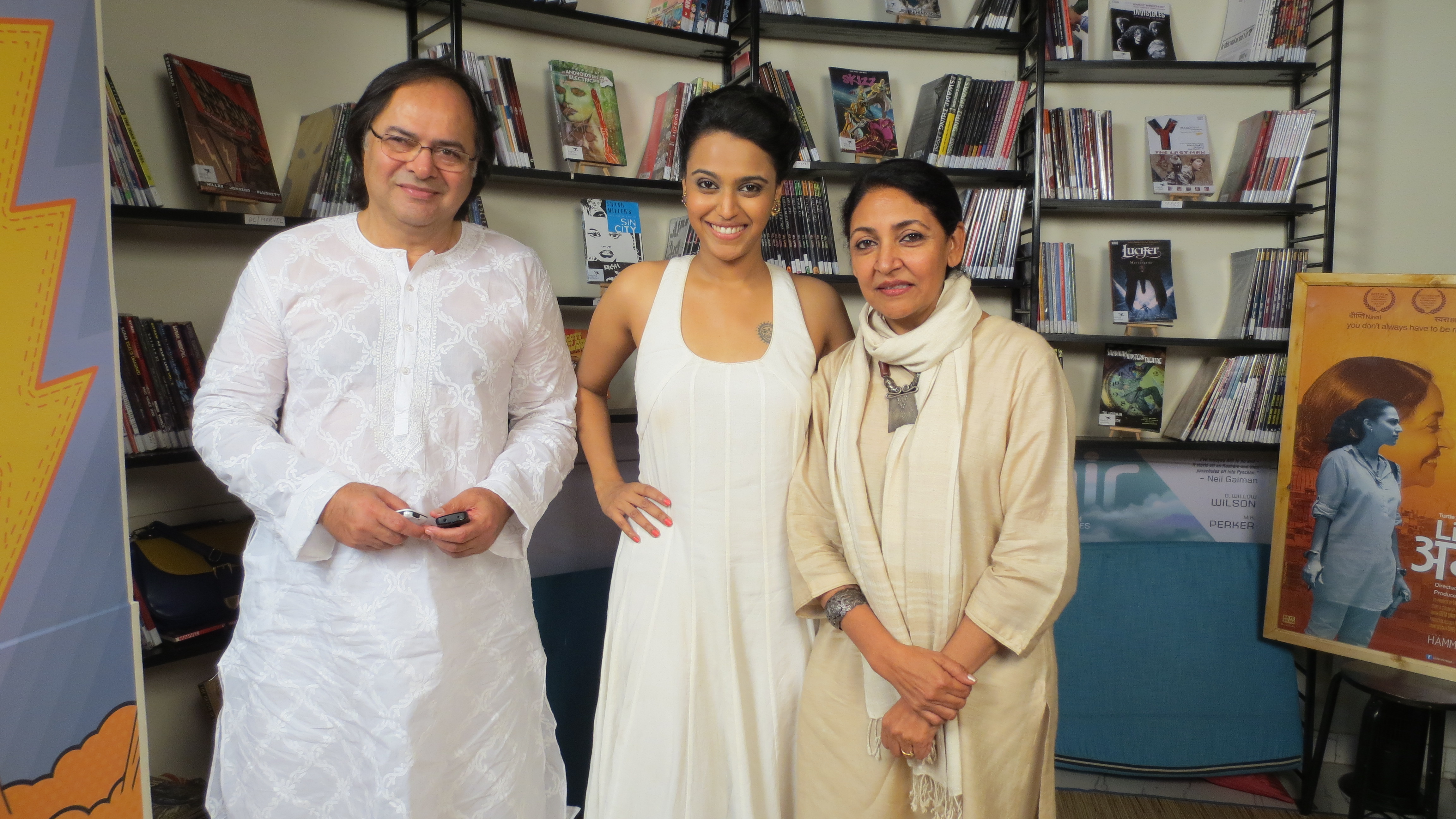
Posts on Farooque Shaikh saab are still pouring in our mailbox. Earlier Varun Grover wrote a post आम है, अशर्फियाँ नहीं (click here). And then actor Swara Bhaskar wrote another beautiful post about her memories and working experience with him (click here). This new post is by Sudeep Sohni, a first year screenwriting student at Film And Television Institute of India, Pune.

Farooque

फारुख शेख सेट मैक्स, ज़ी सिनेमा और स्टार टीवी पर दिखाई गई फिल्मों के कारण दिमाग में कुछ इस तरह बस गए कि अब स्मृति से छूट नहीं रहे. सिनेमा का एक सादा चेहरा, शुक्रिया तुम्हें, ये दिखाने के लिए मुझे कि सिनेमा इतना सादा भी हो सकता है.

ख़ामोशी के जंगल जहाँ अपनी पत्तियों की आवाज़ें सुनाते हैं

तनहाई का मंज़र जहाँ अपने पैरों के निशान छोड़ जाता है

जहां दूर से एक हाथ बस हिलता हुआ दिखाई देता है

पुकारने अपनी ही आवाज़

झक सफ़ेद कुर्ते में जहाँ एक मध्ययुगीन दशक मुंडेर पर बैठा

उड़ाता है सिगरेट के धुएं में बेबसी के छल्ले

जहाँ नुक्कड़ की पान की दुकान, ठेले की चाय और कमरे की बेरुखी

तकाज़ा करती है सदी की सबसे महकी दोपहर का

जहाँ शाम का ढलता सूरज और रात की उदासी

मचलते ख्वाब की नमी छत की कड़ियों में अटका जाती है

वहीँ से शुरू होता है सफ़र तुम्हारा.


विदा

उस ठहकती हंसी से

जिसमें अब भी बंद है संसार का सबसे ख़ूबसूरत समय

और

जो किसी भी भाषा की भाप से पकड़ में नहीं आएगा

वो समय जो दर्ज है आँखों की खिड़कियों में

और जो चाहे तब भी उड़ नहीं पायेगा भाप बन कर

बस जमा रहेगा

किरचन बन कर रुई की लुनाई-सा

कि जब तुम दिखोगे परदे पर कहीं टीवी के

दूर तालाब के किनारे

उतर आएगा ख़ामोशी का गर्म सोता

और बहता रहेगा रगों में आहिस्ता-आहिस्ता.

This is a guest post by actor Swara Bhaskar. She worked with Farooque Shaikh in her film Listen Amaya.

listen amaya3

Perhaps the most vivid memory I have of the iconic and gentlemanly Farooque Shaikh is from the second day of shooting Listen Amaya. We were in the chaotic and uncontrolled environs of the Paraathhey Wali Gali of Old Delhi, trying to shoot sync-sound (!) a long conversational scene. It was hot, noisy and the narrow lane was becoming increasingly stuffed with curious onlookers since word had got around that the much-loved veteran actor was in Puraani Dilli. We were between shots and had eaten a large number of paraathhaas, and the production had relaxed the ‘set-lock’ so that crowds could go about their morning routine. Two scrawny men, hands-in-one-another’s-neck in the classic Indian male camaraderie pose sauntered by. One of them spotted Farooque sir and started. He came up right upto Farooque sir’s face, close enough for me to smell the gutkaa on his breath (!), peered at Sir with beady eyes and exclaimed to his friend, “Abey Frook Saik ko dekh ley!” The friend also brought his face close, looked and rejected the proposition pointing a scoffing finger at Farooque sir’s nose. “Abey yeh Frook Saik thodey hi hai! Chal bey!” They argued a bit more in this vein, peering and pointing, till the first friend turned to Farooque sir and asked nonchalantly, “Abey tum Frook Saik ho kya?” Farooque sir looked regretful and said apologetically, “Haan bhai sahib, hoon. Muaaf kar do, agley janam mein yeh galati nahi karungaa!” And that day I discovered the most telling aspects of Farooque sir as a person – grace, dignity and wit in any circumstance.

In the days that came, still shooting in that bustling, throbbing, historic part of the Capital I discovered Farooque sir’s wit was ever-ready, always decent and sometimes wicked! Again we were waiting between shots, this time in an air-conditioned sari shop in Dariba Kalan. Farooque sir sat with his back toward the shops entrance. I looked up two minutes into having entered the shop and found the glass windows of the shop plastered with faces, staring and pointing at Farooque sir’s back. “Sir you are going to be mobbed, how will we get out of here?” I asked. “Don’t worry, I’ll tell them all you are Katrina Kaif and then watch them clear out of my way.” I smiled at his reply. A minute later we were called to location. The single and novice assistant director escorted us out of the shop. Sure enough Farooque sir began to be mobbed. Holding a protective arm around me and totally unfazed he said in a loud voice in Hindi, “So Katrina! How did you like riding a cycle rickshaw?” A murmur ran through the crowd and some people began to crowd around and peer at my face before expressing their disappointment vociferously! Farooque sir however reached the cycle rickshaw comfortably and merely smiled at my horrified exclamations.

Generosity was another quality that defined the great actor. Farooque sir was always giving gifts. But his generosity had the mark of an aristocrat. The flourish of the Nawabs, who he has essayed in more than one memorable portrayal. Back in the bylanes of Old Delhi, as we shot, we passed a sweet shop.

“Swara ji, would you like a gulab-jamun?”

“Sure sir!”

He turned to the man behind the counter and said “How many gulab jamuns do you have bhai?” The man replied in Delhi’s typical surly manner, “How many do you want?”

“How many do you have my dear man?” repeated Sir.

“First you tell me how many you want.” Replied the man now cocky.

“I’ll take as many as you have.” Said Farooque sir calmly.

“I have 25 kilos.” smirked the man.

“I’ll take them all.” Smiled Farooque sir and turning to the spot-boy on our set said “Dada, distribute these among the entire unit.”

15 minutes and a scene later we stood on location and a jaamun seller wheeled his fruit laden cart by us. “Swara ji do you like jaamuns?” Asked sir.

“Yes sir.” I smiled now expecting a bag full of the tangy purple berries.

“Bhai..” Said Farooque sir, putting a gentle hand on the street vendors thin shoulder. “Give me all these jaamuns.”

The jaamun seller stared at Sir in disbelief. “This entire cart-load?” He asked.

“Yes.” Said Farooque sir simply and turned to our spot-boy, and repeated the words we would hear again and again throughout our shoot “Dada, distribute these among the entire unit.”

As an actor Farooque sir was a remarkable lesson to observe and his technique was difficult to fathom. He never spoke much about the craft of acting or his ‘process’ and one often found him reading a book between scenes. But to actually watch him ‘in action’ and witness his effortlessness when performing or (the most difficult task for an actor) just ‘being’ in the moment; one could see that here was an actor with finesse, control and depth in his craft. But perhaps what marked him as an artist with a true understanding of the medium was an aside he once made while narrating a story about Hrishikesh Mukherjee. Mid-narration Farooque sir paused and said, “An actor can never go beyond the vision of a director. This is the truth of our cinematic medium and it’s very important for an actor to understand that.” And then with the characteristic twinkle in his eye and a lopsided smile he quipped, “There you have an excuse to shirk hard-work!”

But amidst all those jokes and wise-cracks there was a profound, well-bred, well-read, genteel decency-of-conduct. And more importantly, a quiet wisdom. These qualities deservedly gave Farooque sir a reputation and public image as spotless as his impeccably starched white chikankari kurtas, and so much affection and warmth from his audiences. A raconteur par-excellence Farooque sir was a fund of stories. Stories about the industry, about actors, directors, stories he had witnessed, stories he had heard, about his own time and about the time gone by. And with each story he would sigh and philosophize about the human condition. In one such account involving an incident between a producer and a-then-superstar, Farooque sir ended with the well-known saying that “just because the sunlight is falling on you does not mean you’ve become the Sun. Today it shines upon you, brightening your countenance, tomorrow it will bestow this grace upon someone else.” Seemingly, obvious and mundane; but in our fame hungry and glory thirsty industry, what a precious-lesson-well-learnt-but-often-forgotten! It must have been an acceptance and understanding of this fickle nature of stardom that allowed Farooque sir to hold his own, carve his own unique place and identity and win the affections and remembrance of audiences in an industry that generates super-stars with almost mechanized efficiency. Though in his own words he laid all the credit and blame for his attitude, his successes and his place in the industry to ‘laziness’. Co-star and friend of many years Deepti ma’am (Deepti Naval) would oft-times chide Farooque sir saying “You MUST write Farooque! Why don’t you write??”

“Who will make the effort? All that hard-work is for your type, I have neither the discipline nor the brains.” Farooque sir would retort and begin to tease Deepti ma’am again.

But he was being characteristically modest. Nothing about Farooque-Shaikh-at-work suggested a lazy actor. It was something else. Farooque sir was an observer. He had that quality that perhaps is considered more apt in philosophers – of observation, understanding, analyzing but never judging. For a man of such sense, education and judgement, Farooque sir was also a person with great empathy. Never once in the (albeit short) time that I was blessed to know him, did I hear a harsh judgement from Farooque sir. Even when he was critiquing someone, it seemed as if he was empathizing with the person’s flaws. A man with a clear understanding of society and politics and Farooque sir always had a perfectly balanced, liberal and fearless position on world events. He seemed to relish this position. Of being able to step into the circus-ring that is Bollywood, play his part and then step out take his seat and watch the show, with that knowing smile on his face. Perhaps that is the true uniqueness of Farooque Shaikh’s place in Bollywood: an insider but equally an outsider; an actor, but also an observer. And that is why in an industry which generally espouses the ‘when-in-Rome-do-as-Romans-do’ philosophy, Farooque Shaikh held his own, and lived and worked on his own terms, truly nawab-like.

Goodbye Farooque sir, but not fair. Too soon! You’ve denied us so much that was yet to come. So many more great performances, warm stories, witty quips, wise observations, promised dinners and that peti of aam!

IMG_0151

(An edited version of this was published in Indian Express)

POTD : Why did YRF publish the spoiler of Dhoom:3?

Posted: January 1, 2014 by moifightclub in bollywood, POTD, Spoiler, WTF
Tags: , ,

Here’s the half page ad that was published in today’s HT Cafe of Mumbai edition.

D3

Are they done with the business of the film? No wonder it has done a great business so far and the claim in the advertisement is true too. And they are still making money. So why spoil the party for those who still haven’t seen? This is a rare thing.

For its latest box office numbers, check BOI here.

As we have done in the past, this year too we are trying to source the scripts of some of the best films of the year. As most of you know, the scripts of Hollywood films are easily available online, even the unreleased ones. But we don’t have any such database for Hindi or Indian films. So that has been the primary reason for this initiative. And it has been possible because some of the filmmakers have been very supportive about it. It’s only for educational purpose and much like the spirit of the blog, is a complete non-profitable exercise. Thanks to Abhishek Kapoor, Hansal Mehta and Vikramaditya Motwane, we have been able to post the script of Kai Po Che!, Shahid, Lootera – here, here and here respectively.

Nikhil Advani burst into the scene with a terrific debut, Kal Ho Na Ho. Rarely someone gets everything so pitch perfect in a debut film, and that too when done in mainstream space. But since then he has not been able to repeat its success. This year he found his mojo back with D Day, but by going out of the space in which he has been making films so far. Unlike any of his previous films, this one was a taut edge of the seat thriller, specially the flawless first half. And when every damn song looks the same in every damn film these days, he gave us one of the best set pieces in Alvida. Who says we don’t need songs in a thriller?

Thanks to Advani, we are posting two drafts of D Day – one is the first draft and the other is the shooting draft. Read, share, learn and have fun.

Film – D Day

Screenplay – Nikhil Advani, Suresh Nair, Ritesh Shah

Dialogue – Ritesh Shah, Niranjan Iyengar

We have finally come to the last post of our Rewind 2013 series. If you missed our previous posts in the series, here’s the complete list – 20 Things We Learnt At The Movies and 13 Unanswered Questions is here, Top 10 Musical Gems We Discovered This Year is here, 15 Film Fanatics on 17 Terrific Films That Have Stayed With Them is here, 14 Bollywood Songs We Played in Non-stop Loop Is here, and 16 film buffs on 16 most memorable scenes of the year is here.

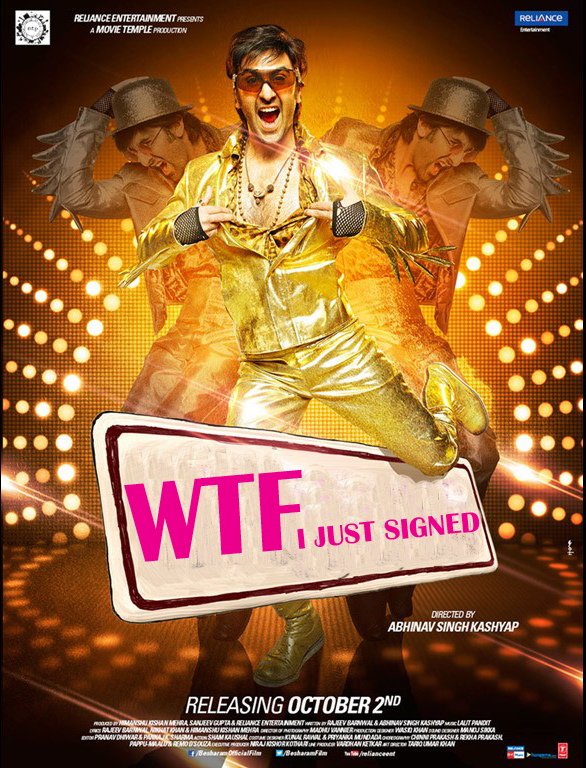
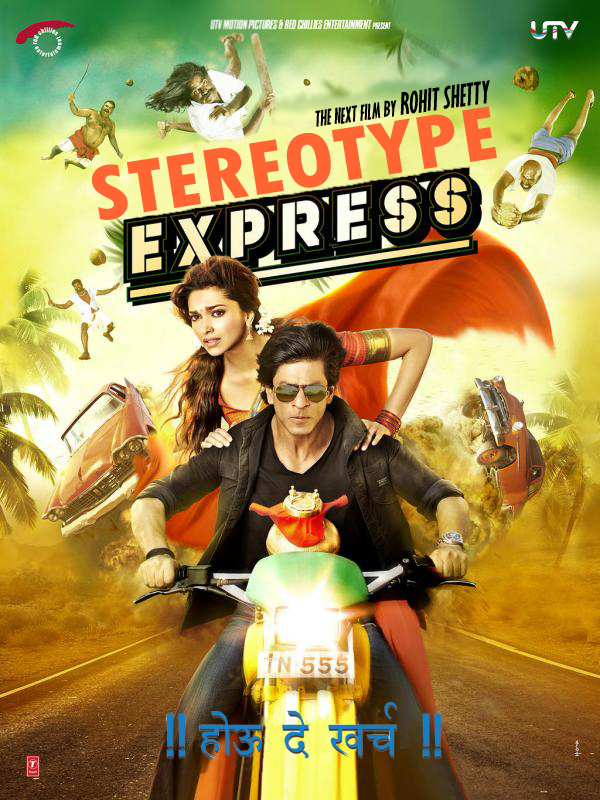
This one is on posters. So what is a film poster suppose to do? With so much hype around the release of first look of any film, it’s your first pitch for the audience. It might not make or break your film but it surely starts setting the mood for the film. But do they always tell what the film is all about? A good film poster is a rare thing. And recycling is the funda of the game (we recycled this para too). Click here to read an interesting piece – thirteen movie poster trends that are here to stay and what they say about their movies. And if you heart posters like we do, here‘s another interesting site for minimal movie posters.

We were trying to make at least a dozen honest movie posters. But thanks to computer crash and last minute ditch by another contributor, Varun Grover and Rakhi managed to make only these six. Enjoy. Do share if you have made any.

Besharam 1_final

Chennai Express

Grand-masti1

Jackpot 1

Krish 2

Satyagraha3

As we have done in the past, this year too we are trying to source the scripts of some of the best films of the year. As most of you know, the scripts of Hollywood films are easily available online, even the unreleased ones. But we don’t have any such database for Hindi or Indian films. So that has been the primary reason for this initiative. And it has been possible because some of the filmmakers have been very supportive about it. It’s only for educational purpose and much like the spirit of the blog, is a complete non-profitable exercise. Thanks to Abhishek Kapoor and Hansal Mehta, we have been able to post the script of Kai Po Che! and Shahid here and here.

Lootera has been a subject of much debate and discussion on this blog. And if you are regular reader of this blog, you probably know that unlike other filmmakers Vikramaditya Motwane has always been gracious enough to take it in the right spirit. He has also been much supportive of this endeavor to share scripts publicly and helped us by sharing the script of his film Udaan earlier. If you haven’t read the script, it’s here.

In this post, we are sharing the two drafts of Vikramaditya Motwane’s Lootera – the second draft of the script (in English) and the shooting draft of the film (Hindi dialogues).

Film – Lootera

Story – Inspired by O. Henry’s The Last Leaf

Screenplay – Bhavani Iyer and Vikramaditya Motwane

Dialogue – Anurag Kashyap