Archive for the ‘film review’ Category

PJ – As a reviewer wrote, ” Perhaps Prakash Jha is just punning on his initials, and laughing at us all”. We thought its priceless and deserves to be QOTD! But who knew that PJ would really get down to play dirty and stupid politics. First story is our conspiracy theory and second, our sources say, is cent percent true. And if second story is true, then we are sure about the first one too.

Here is the conspiracy theory. Padmaja Thakore posted a review of Fart-neeti on PFC, and in not so kind words. Two days later, the post vanished. No reason was given, where and how. And if you have been following Padmaja Thakore’s posts, then its not difficult to figure out how strongly she defends her reviews. Suddenly withdrawl symptoms! Why ?

We were curious and tried to put two plus two together. We found out that she is married to filmmaker Manish Tiwari who made his debut with Dil Dosti Etc. The film was produced by Prakash Jha. According to our theory, PJ must have got to know about the review and didn’t take it lightly. Ghar ka bhedi Bivishan, ok, Bivishan’s wife ( Yes, if they can take Mahabharata route, we are going Ramayan way). And thats why, without any reason Padamaja Thakore removed her Raajneeti post from PFC. If you are still interested in reading it, click here to read the post. Courtesy – Google cache!

Now, the fact. We have got to know that PJ has been calling the big bosses of one of the popular websites and has threatened to sue them and their reviewer. Reason ? Their Fart-neeti review and the reviewer’s hilarious pricesless quotes on him and his Fart-neeti film. It seems PJ, unlike his intials, doesnt have a funny bone. And our sources say that this news is cent percent true. If this is true, we are sure that our conspiracy theory is correct too.

Whats more, this is not the first time that PJ is doing it. When his film Apaharan released, something similar had happened. The film had a tie-up with one of the major hindi news channels. But when the channel gave a bad review to the film, PJ called up the person concerned and got into an altercation, on how they can give bad review to the film when they are channel partner! Since then, the two have not been on talking terms!

Someone need to tell Mr PJ that any kind of partnership doesnt mean that you own the editorial right over any kind of content! Unless, its Khat-Ni LajMi ! And yes Mr PJ, now we know why you lost the elections, not once but twice. Think big, play politics at bigger level, not dirty & petty ones!

PS – And after all this, we read a profile of PJ in the latest issue of Tehelka that portrays him as a man born with instinctive love for risk! Yawwwwnnn…..we have happily moved to Open!

PPS – Dont get us wrong, we also used to love his films. But then, his “films” used to deal with politics and not “him”! Now its all just a PJ!

Here was our bet! And yes, she doesn’t disappoint! And like always, we are again damn right! Ok, tired of saying it. BTW, we are being warned from different sides – Karara jawab denge! We replied – Hum dekhengepar jo kahenge sach kahenge….

And if you are still interested in reading the review, click here.

The name is La-zmi. KhatNi La-zmi! She is known for starting her ”stars” count from three. Give her any movie to review and it will be three. We follow a simple thumb rule when it comes to her star ratings. La-zami’s 2 stars = zero. So, 3 = 0+1 = 1, 4 = 2 and 5 = 3. Try it out for any movie and it works every time.

Plus, she also has the distinction of being the only film critic in India who even plagiarised a film review!  Ooh la la! What a Tale it was, Shark Tale. And that too from Roger Ebert’s review. Aur bolo ? And if you were in your nappies those days, you can click here and here to read more about the scandal. If you are reading the first link, do check out the comment section (4th comment) for complete proof of her xerox machinery!

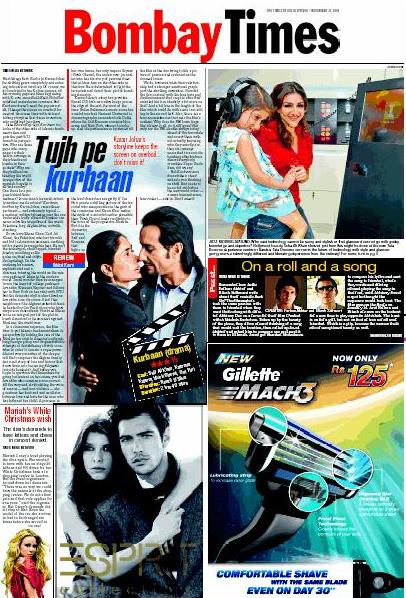
And after all this, she still has her job with India’s one of the biggest media group (ok, giant). Plus,  there is more! Remember how her Kurbaan review suddenly made it to the front page of Bombay Times on that bloody friday!

We are exactly not sure who get to make how much for every “star” that matters and for moving the review from Page 8 to 1st Page! But someone surely is busy counting.  And it cant be only her!  But here comes the best part – it didn’t help the makers and distributors of the film any bit. The film bombed and how!

Ask any Delhiwallah and they will happily tell you how exclusive screenings are held for her. Ok, she may be plus size (or XXXL or whatever) but she surely doesnt need the entire theatre to herself. Why aren’t other critics invited for the same ? Brownie “stars” & more! It happened during Paa too. And when some of the Delhi based critics raised their voice, Amitabh Bachchan apologised about the same. Now after all that history, here is the latest dope!

We are sure, cent percent sure! The makers of Raajneeti have already shown the film to her. Only her. Almost a week before the release. And she has confirmed her rating to them! Four fucking stars! Not sure who fucked whom, where, how and in what position but its gonna happen. We are willing to bet! Unless our blogpost manages to make enough noise for her/publication to change it from 4 to 3.5 stars! But if the group is involved and cheques have been passed, then aandhi aaye ya toofan, its gonna be four, fucking four!

And its not only her and the publication, the makers of the film are no lesser culprit. BTW, do we see a pattern here ? Its from the same production house! Have they cracked a “stars” subscription deal ? Looks like. As the dude sang, The Times They Are A-Changin’…..just that we didn’t realise that it will go to the other extreme!

UPDATE – We returned home and switched on the tv, it was Bambai se gayee Poona, Poona se gayee Patna n blah blah blah on SetMax. That was Juhi Chawla. But guess who else is singing…delhi se gayee bambai, rating meri bhi bik gayee! Same old Khat-Ni Lajmi. We got lil wrong on the location info. It seems she was shown the film in Mumbai and NOT in Delhi. And the makers flew her from Delhi To Mumbai to screen the film for her. Now, we are gonna bet its 4.fucking5 stars!

What ? When ? Where ? How much ? And why ?

Its an age-old debate. And things are changing now. In west, the new rule is “Forget the critics, Fear Twitter”! Plus, there are many popular bloggers now whom viewers trust more than many critics because they know that there cant be any hidden agenda there. And may be thats why many publications are in the process of doing away with critics.

Ok, enough of our review gyaan. Since we are putting it as VOTD, do check it out. Taran Adarsh, popularly known as Trash Adarsh for his movie and film reviews, discusses the issue with Minty Tejpal (Mumbai Mirror), Meena Iyer (Mumbai Mirror/TOI) and Rajeev Masand (CNN IBN).

Some candid confessions, some strong opinions, west versus east, do producers/directors try to influence them and why do they write/say, the way they do. And they even discuss Nikhat Kazmi!

(PS – Mumbai Mirror belongs to TOI group)

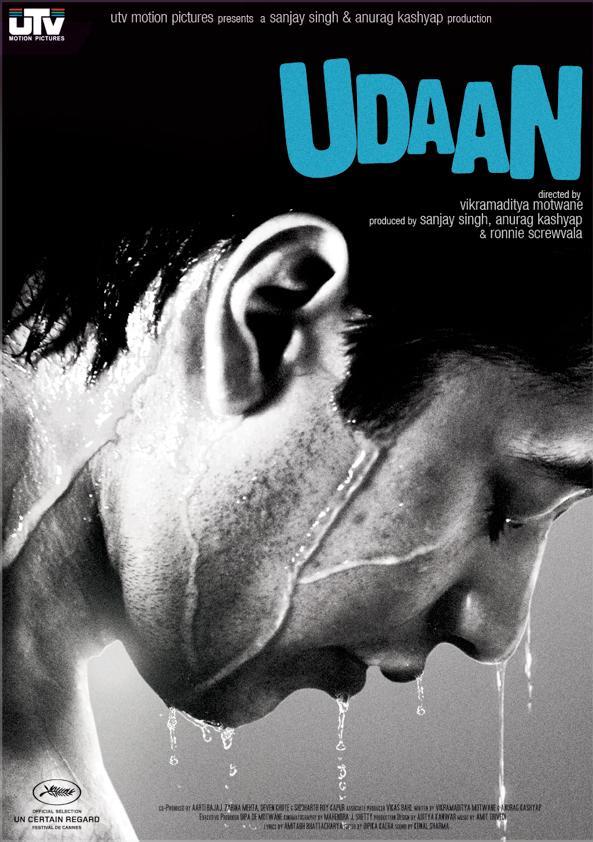
Some of us were lucky enough to catch a screening of Vikramaditya Motwane’s Udaan. I came back, sat down with my laptop on the writing table, wrote the header for my post – Days Of Being Wild & the Pains of Growing Up. Looked up. The poster of Persepolis, newly framed, was in front of me. I put on the same thinking pose and in my thought bubble went back to the days of that small industrial town where I grew up. Same state, different town. Udaan is  set in Jamshedpur.

The post remains unwritten and is saved as a draft with only the header . Cinema that connects  strongly, has this effect on me. Either I go silent or feel like pouring my heart out. After Vihir, Udaan is the second film of 2010 that I fell in love with. And the best part is, its uncompromised. Who would cast Ronit Roy, Ram Kapoor and  a bunch of new kids to make a film! Producer Anurag Kashyap and Sanjay Singh did. And Vikramaditya delivered. More power to people who dare to make such films! A script which was rejected by almost every producer in Bollylalaland, got made, and made it to Cannes’ official selection. Aur bolo?!

Finally, good friend Fatema Kagalwala came to our rescue. Yes, same Fatema, the girl on the bike (She doesn’t like the description but we feel it sounds cool like the title The Girl With the Dragon Tattoo)! And she drives smoothly even after four pegs! Anyway, back to Udaan. Read on.

There is moment of breaking-free in every teenager’s life. From barriers within or without. And this is a journey that defines the rest of life’s journey. The moment when one takes wing. And flies away to find one’s feet in a world where the present is free from the past and the future a freedom to dream and build.

It is said that the things that we cannot change, in this flux of constantly changing life, are the things that end up changing us the most. But it is also the things we break ourselves to change that end up keeping us together. Rohan finds that out as he sets out to find himself among the pieces of life thrown to him by fate. Thrown out of hostel and college for a breach of (archaic) rules he finds himself in his home with an over-bearing, uncaring, violent father and a step-brother he has no knowledge of. The odds are stacked against him and larger because of his nature.

Rohan is a poet, a sensitive soul…fully well personifed in Rajat Barmecha’s soulful eyes and tender expression. And the poetry he writes is equally touching. He writes of his innermost quests, his need to find his path, his feet in a confusing world of do’s and don’ts that don’t make sense to his simple desires and simple individuality.

Rohan’s dilemma is as special as it is common. A semi-neurotic father with demons of his own to battle clamping down hard on the gentle boy and his harmless dreams forms the core of his life that is now reduced to an empty carton much like the cold, spaceless walls that adorn his house. The only sense of belonging he ever felt is far away in Mumbai, the city of dreams, his bunch of pot-pourri friends that are seemingly very happy and carefree, a life Rohan craves for. A shadow of a loving yet unattainable family in his chachu’s person and marriage gives Rohan the much needed respite from the tyranny and cruelty of his circumstances…

But Udaan needs to be experienced not explained. It’s a simple story, simply told. And like a friend said, a ‘difficult’ simple film to make. As it goes in simple stories what you don’t do is more important than what you do. It is the pitfalls that are avoided that make the subtle milestones achievements. Writers Vikramaditya Motwane and Anurag Kashyap pick and choose moments, shear them of over-emphasis, indulgence and sentimentality and present a coming-of-age story that is as universal as unique.

Of course, there are also moments of glorification that seem out of place…a bit of clichéd representation of conventional thinking…a bit of over-doing of the ‘feel-good’ factor…they make for a few wincing moments…taking away from the absorbing true-ness of the film…somewhere indicating a lack of real depth…but they do not take away from the soul of the film, which is clean and sincere, much like it’s protagonist and his dreams.

The film is Rohan’s story but the other characters complete his picture well. The balance in characterization, a rare treat, is a genuine pleasure to experience, especially the father’s. A brutish tyrant who could have been painted black and explained away, is handled with a touch of grey never justifying his behaviour but by just putting a germ of reason as to why he must have turned out like this. A back story would have killed it. Especially with the diversity of perspective that is brought in by how Rohan looks at him, how his brother looks at him and how the audience looks at him. It clearly makes us take sides but with an understanding. And that understanding is fraught with the knowledge that life is like that. Imperfect and full of tough choices. And it takes the theme (as it may be defined) that either you let your past dictate your present or you dissociate and build a new present for yourself. Beautiful contrasting life choices in the personification of the father-son.

The step-brother (a perfect cute-heart casting) brings out more of this of balancing out of the human-ness of its characters. His fears are matched well with his simple dignity and his silence used perfectly to show his place and role in the scheme of things. His small and limited presence looms large, very telling of the family dynamics and Rohan’s decisions.

Generically, the film is very European in its film-making sensibilities. The use of sound and silence is stark, contrasting. The cinematography captures without drawing attention to itself (the denial of over-weening cine-artistry is actually a pleasure in these times of technology obsessed film-making). The dialogues are conversational, everyday life but never pedestrian. The power of realism rests in every creative choice the director makes to tell his story in the most earthy fashion. And the power of realism shines through a well-told story that speaks from the heart and goes right through the heart. An extremely heart-warming debut by director Vikramaditya Motwane, one that shoots our expectations of his second feature sky-high 🙂

And she tries to make sense of his new production Phoonk 2. Though she didn’t win the 5 lakh cash but she managed to sit through the film. Here’s her Phoonk-y dissection. PS – If possible do play Rekha Bhardwaj’s Phoonk phoonk phoonk de to go with the post as its need lil bit of patience to read. In short, lamba hai!

RGV is dead! Long live RGV!

No, it is not sarcasm. I have never understood the import of the above conundrum fully but I think it does apply to our all-time, blue-eyed hero Ram Gopal Verma who loves killing himself with every film in the hope of resurrection with his next. With Phoonk 2, he delivers a punch in the gut to every self-respecting horror film and horror-loving audience, horror-knowing critic. RGV’s word in film-making is final. And will remain so. That was a horrific punch, sorry.

RGV has always done path-breaking films from Shiva, to Satya to Go to RGV ki Aag. He has always pushed the boundaries of conventional narration and formula and made his own language. From Shiva, to Satya to Go to RGV ki Aag. He has engaged with psychology of the characters and pushed the idiom of right and wrong, individual vs society and film vs cinema. From Shiva, to Satya to Go to RGV ki Aag.

With Phoonk 2, RGV, breaks new path. (One wonders how many times this so-called ‘new path’ will be broken? Time and again people say that fellow Anurag Kashyap does it, then recently the town went mad claiming one Dibakar Banerjee too did it. Do they do it with an axe, break this new path, I mean? Must ask RGV, he should know.) The film breaks every ground of conventional narration and has to its credits technical breakthroughs that neither stalwarts nor genius kids can imagine. It covers potent philosophical questions and gives it to its unsuspecting audience as a side dish much more savoury than the main. The sub-text for the uninitiated. We shall talk about the sub-text of Phoonk 2 here.

Phoonk 2 asks some deeply disturbing philosophical and existential questions. Its basic premise, as is that of any film worth its salt in the history of Indian or even phoren cinema is the premise of good vs evil. Phoonk 2 treats this empirical question of human existence as a pedagogical subject of epistemology. The depth with which the lady ghost engages her detractors on her trap of death is an intense viewing experience, especially noting the ease with which she does it. The first one is finished off with a neat head cut off dripping blood by the gallons and the second in superbly crafted acrobatic action. Both these ‘babas’ (no not of Ba-Ba black sheep fame, but then yes maybe) represent the force of good and the ghost lady of evil. The thunderstorming violence with which she unleashes her evil on these two brings into question the very essence of the fight of good vs evil and the strength of each? Well, the battlegrounds are a bit unequal here to raise such significant questions as the evil is so well-endowed (with make-up expert fight masters et al) and the forces of good are? Dhongibabas. Not really a fair representation and hence the question remains unanswered.

The hero, the savior and be all and end-all of everything in a Hindi film steps in gallantly to address this question. But he brings in more layers to this already deeply complex philosophical issue. Can a man with the help of mere continuity jumps, axis jumps and bad Big B imitation save his child from the forces of evil? Does his will alone, helped largely by these instruments succeed in towering over these forces? RGV refuses to stay objective but has the gumption to take a stand here. He boldly steps forward and says, yes, he can. If the film is a Hindi film especially a horrific RGV one, he can do anything. So the hero does. And solves this question of philosophy which would have disheartened Plato.

Phoonk 2 at various levels also engages with existentialism. RGV takes Sartre’s philosophy of existentialism as humanism and turns it succinctly on its head by proving that freewill is not only an attribute of humans. Even camera’s can have it and cinematography and editing shall own the responsibility for it. In a path-breaking manifestation of this philosophy he makes his camera roam here, there and everywhere, making it independent of any conventional language/barriers/notions that society has set upon it. Thus it frees the language of cinema from its own barriers and one sees thrilling, liberated cinematography totally in love with itself.

It is not in the realm of the philosophy alone that RGV resides in. He does address concerns of sociological interest too. Those of relationships and growth while living within the society (yeah sounds contradictory na, to me too). By having the wife refusing to kiss her husband even years after they are married and SO MUCH in love, he arouses(pun unintended) a question pertinent to the Indian society.  That of the sanctity of their conjugal life, that of the privacy of the moment and the non-sexual, pristine image of the woman as wife that should not be broken by kissing your husband goodbye. Similarly, the child, in her pre-teens exhibits similar notions of society-bound rules of growth where she is continuously enamoured by a doll and is drawn to it with a fascination that belies her age and which must also be beyond the ghost who put it there. RGV addresses these very severely important notions of regressions and makes a stinging social comment on society through his protagonists.

In a drama panning several ideologies of human philosophy, RGV does not shy clear of addressing perhaps the most controversial of them all, gender issues. Phoonk 2 is a path-breaking chapter in gender-studies with an ever-evolving lady ghost who chooses to enter the lady of the house’s body and chooses to quiet down as soon that body is killed. One might think this is an extension of the existential question but such is the genius if RGV that he notices and tackles the subtle differences sensitively. The lady as a ghost in the body of the lady of the house is a universal symbol of how women are women’s own enemies. This is also reflected in the ghost killing off the only semi-good-looking girl in the cast, evidently out of jealousy as she is not much to look at now that she is dead and neither was she when alive. In a subtle twist in the tale, RGV beautifully changes the protagonist into the antagonist and quickens the pulse of the film by thrills and chills but also manages to relay his sub-text which examines gender issues as vastly potent as these.

Secondly, it must be noticed that both the babas are male. And the primary subject of Madhu, the ghost’s revenge is also male. The only other victim besides the hero’s sister is also male, the hero’s best friend. This brings clearly into focus the question of the fight of females against their subjugation and male domination. Madhu single-handedly wages this war against male hegemony and patriarchy in her war against this family and RGV succinctly portrays the difficulties a woman has to survive and make her mark in a male-dominated society. That the lead protagonist to bear the torch of such an important question be a ghost, only the great RGV could have thought of it.

In its attempt to elevate our mundane existence to greater heights by engaging our minds to higher domains of philosophy RGV does not forget his environment. He continues to engage with everyday concerns and addresses some deep-rooted questions relating to the film industry too. The impoverished fake blood industry for instance. The coming of Sooraj Barjatya and Aditya Chopra had sounded their death knell. But RGV, in Phoonk 2 made sure they made good their losses of the past ten years or so. Such deep is his commitment. Such deep also is his commitment that he has generated employment for people based on his conviction alone. Jobs for stadicam operators for instance. The one of Phoonk should be eternally grateful to RGV to have got to shoot an entire film in this manner. Secondly repeating actors.  In an industry that changes colours with every hit and flop RGV maintains his loyalties. We have seen that consistency with his heroines in the past and have admired him for that.  Repeating actors despite their bad performances shows solidarity, something that the likes of Farah Khan also don’t do even if SRK is a buddy and delivers a hit with her everytime. That is because it requires a man like RGV to do and I am not engaging in gender issues. Leave that to the masters.

Ultimately, Phoonk 2 becomes a spiritual experience. From the realm of sociology to philosophy it reaches its zenith in spirituality elevating one’s soul when it forces us pray for a speedy end and hope that this time the end does mean the end.

Long Live RGV!

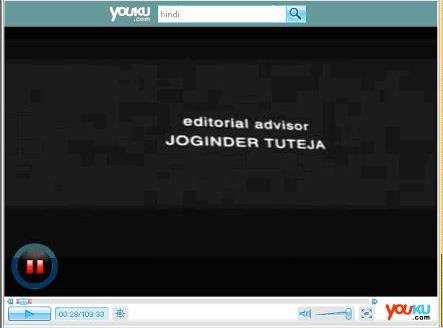
Wondering why we are wasting so much energy, time and space on this certain Mr Joginder Tuteja…naah..we like the surname Chutreja! Who is he ? Really! Ok, take a look at the following two pics…

This is a screen grab from the film Jaane Kahaan Se Aayi hai. And Mr Chutreja gets an opening credit in the film, as “Editorial Advisor”. And that too, all solo. Even Chetan Bhagat didnt get that. BTW, can someone please explain to us the contribution of “Editorial Advisor”. Now check this out.

Here is the print ad that quotes the same Chutrejaji, unless there are two Joginder Tutejas.

So, Chutrejaji has given 4 fucking stars to Jaane Kahan Se Aayi Hai! Even Nikhat Kazmi has given 3.5 (count that 1.5. Because her maths is all wrong. Count her 2 stars = zero. Then it fits well. Try it next time). So, is this the role of “Editorial Advisor” ? 4 stars ? And how unethical it is to review a film in which you have an opening credit! Will the real Mr Tuteja or Chutreja please stand up! And he writes for PTI! Aur bolo ?

Can someone please explain this to us ? Or is it just namesake ? If so, we are sorry but please tell us the role of “Editorial Advisor”. We would love to try our luck there. Bet it includes a fat cheque too! For the rest, well, if this is the state of affairs, film criticism better be dead. Let A O Scott argue as much as he wants too. Long live Chutrejas!

This weekend there are two releases. Shyam Benegal’s Well Done Abba and Kabir Kaushik’s Hum Tum Aur Ghost. At 76, Benegal is still in no mood to rest. Well Done Abba stars Boman Irani, Minissha Lamba and Samir Dattani and like many of Benegal’s films, its a social satire.

Anupama Chopra (NDTV) – The end result is that Well Done Abba is heart-felt and intermittently funny but not flat-out delightful like Benegal’s last film Welcome to Sajjanpur. You need oodles of patience to enjoy this one. I recommend that you wait for the DVD so you can speed up things yourself – 2.5/5

Rajeev Masand (CNN IBN) – Despite some genuinely comic portions in which Benegal exposes the extent of double dealing and bribery involved in Indian rural politics, the film as a whole is hard to enjoy because of its sluggish pace, and because of your inability to empathize with Armaan Ali – 2.5/5 

Mayank Shekhar (HT) – Benegal’s certainly locked in a lyrical, layered screenplay here. The subject’s grim. The optimism is unique. Armaan realises along the way the power of an election coming up, the RTI Act, the mike, and the media. The state legislature debates a stolen well. The film remains a fine black comedy, which could only disappoint in parts for its weakened pace, or the director’s discomfort with a soundtrack to help with the movie’s commerce – 3/5

Shubhra Gupta (Indian Express) – But the downside of `Well Done Abba’ is that it is too lax, and, after a point, too stuffed. The pace picks up so slowly that you nearly tune out, and when post-interval, everything seems to be settling down nicely, Benegal starts throwing about long winded acronyms : spelling out the Right To Information Act can stop a movie dead – 2/5

Gaurav Malani (Indiatimes) – Despite being a trail and tribulation journey, Benegal’s direction has a feel-good charm to it. The simplicity in his storytelling is so charming that even when the film extends beyond its climax into a celebratory song, you don’t mind much. The authenticity of a rural setting is something that can never go wrong in a Shyam Benegal film – 3/5

Kaveree Bamzai (India Today) – It’s not the work of a helicoptering writer. It is the work of someone who has watched this life closely and carefully, so well done Ashok Mishra for the screenplay. It’s a place where there are ever more creative terms for bribes–from Diwali to Dussehra to peele Gandhiji. Where dowry is asked for three-door fridges and deewar-wala TV. Where police stations spend time registering thefts of hens, breaking the bakri’s leg, or stealing a door. Watch it and laugh. And wonder at what we have all come to. Pity about the songs though. We could have done without them – 3.5/5

Minty Tejpal (Mumbai Mirror)Well Done Abba is a sweet, whimsical political satire, quite a rare breed in Bollywood. Veteran director Shyam Benegal explores the familiar theme of corruption and inefficiency in small town India in his wry, deliberate manner, a refreshing change in these hypercharged days – 3/5

Nikhat Kazmi (TOI) – The film is a sheer delight, with the events unfolding in a breezy, comic vein which keeps the ribs relentlessly tickling. But what’s more alluring are the colourful characters and the multi-layered approach to the problems of a village which becomes a microcosm of the entire nation – 4/5

Kabir Kaushik made a brillant debut with Sehar. But nobody knows what happened to Chamku. And now its Hum Tum Aur Ghost, which looks similar to GhostTown. Arshad Warsi turns producer & writer with this one and stars alongwith Boman Irani & Dia Mirza. So, is it really Ghost Town or just another coincidence in B-town ?

Anupama Chopra (NDTV) – At the end of Hum Tum aur Ghost, a character declares: kisi ne sahi kaha hai, love conquers all. Not quite. For one, love cannot conquer this muddled script, which veers between rom-com, drama and high emotion, in the most meandering way possible – 2/5

Rajeev Masand (CNN IBN) – Ultimately the film is predictable and tiring because it’s an interesting idea that’s been stretched way beyond its potential. The usually dependable Arshad Warsi delivers a few light moments, and Boman Irani as a friendly ghost helps muster up a couple of laughs. But director Kabeer Kaushik, who gave us the gripping cop drama Sehar, doesn’t seem to have the light-handed touch required to turn this flimsy concept into a fun-filled ride – 2/5

Mayank Shekhar (HT) – Body dies, soul remains, and we all seek ‘mukti’ (salvation), is a very Hindu belief. It appears a natural subject for a Hindi film. The lead actor, also the producer, credits himself for the film’s story. He could’ve acknowledged the little help from David Koepp and the makers of Ghost Town (2008). The protagonist there has his dead buddy, a ghost, follow him around for a purpose. Here he makes contact with an entire town full of ghosts – 1.5/5

Shubhra Gupta (Indian Express) – The pow-wows between the ghosts and the sole human who can see them range from the funny and the lachrymose ( cue, close-up of Warsi, eyes brimming over), but the former are few and far. The interactions between the humans are equally contrived : Armaan’s girlfriend, the glamorous editor of a fashion magazine, is always dressed to the hilt ; his assistant exists solely to declare that she’s lesbian. Gosh. All of these are actors who can make a film thoroughly enjoyable . But `Hum Tum Aur Ghost’ is not that film – 1/5

Gaurav Malani (Indiatimes) – Arshad Warsi’s debut as a writer is so ‘lifeless’ in Hum Tum aur Ghost that even his ‘spirited’ performance isn’t able to save the dead slow film from dying a slow death – 2/5 

Kaveree Bamzai (India Today) – I couldn’t decide what was more grating. Dia’s mile wide smile? Warsi’s scruffy drunkenness? Irani’s desperate attempt to breathe life into a leaden script? Or Shernaz Patel’s faux seriousness as Warsi’s psychiatrist (by the way, why do Bollywood psychiatrists wear spectacles and speak in an accent like Shefali Shah in Karthik Calling Karthik?) And why has Bollywood suddenly discovered diseases? It doesn’t matter. The film is so boring that it threatens to put you to sleep. Hum Tum Aur Ghost is guaranteed to make you wish someone dead – 1/5

Minty Tejpal (Mumbai Mirror) – Whenever the screenplay sags, which is quite often, Arshad starts clicking babes in bikinis or the lovebirds start singing a song, both of which merely titillate to deceive. Arshad tries his best but seems lost through the film, Dia is ditzy but decent, Boman is quite wasted while Sandhya stays spunky – 1.5/5

Nikhat Kazmi (TOI) – When it comes to performances, it’s the Arshad-Boman chemistry that crackles and invests the film with sparkle and wit. Dia Mirza too has her moments as the feisty girlfriend while Sandhya Mridul ends up mostly wasted as a sidekick. What’s even more disappointing is Shankar-Ehsan-Loy’s audio track which fails to throw up a single hummable tune – 2.5/5

Well Done Abba seems to be clear winner this week but the reviews are not as glowing as it was for Welcome To Sajjanpur.

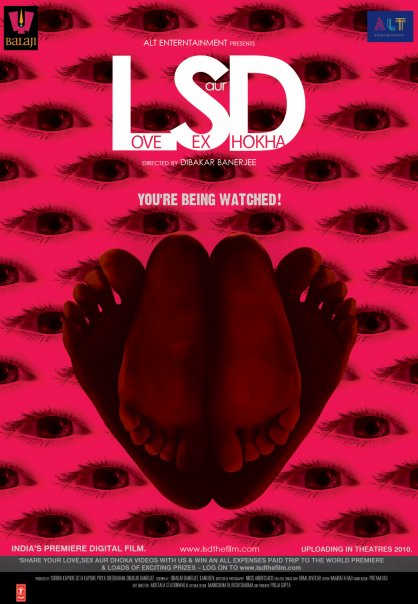
Dhen Tedan! Its friday! And the dope is out. Dibakar Banerjee’s Love Sex Aur Dhokha. Plus Vikram Bhatt is back again and is still struggling to scare us. Sir, aapka naam hi kaafi hai ab!  He has competition only from Ramu. And the third release is Lahore. First, its LSD. Click here to read our take on it.

Anupama Chopra (NDTV)LSD falters in the second half. The second story feels too long and the last isn’t as smoothly done as the first two. But the film is a worthy experiment created by one of Bollywood’s most imaginative and original directors. Let me warn you that it is a polarizing film. You’re going to either love it or you’re going to hate it. But I strongly recommend that you don’t ignore it – 3.5/5

Rajeev Masand (CNN IBN) – In the end, Love, Sex aur Dhokha is consistently gripping, although the third story strikes me as a tad contrived. You will be shocked, you will be startled, but walking out of the theatre, you know you have just seen what is possibly the most important Hindi film since Satya and Dil Chahta Hai. Not only does it redefine the concept of “realistic cinema”, it opens a world of possibilities in terms of how you can shoot films now – 4/5

Raja Sen (Rediff) – It is, as the oft-abused phrase goes, an ‘important’ film, and one you should watch if only to acquaint yourself with the way things inevitably work. It’s bleak, bittersweet, funny and markedly unglamorous, and yet you come out humming the theme tune, your head blown clear off your shoulders. Hell yeah. Welcome to adulthood, Bollywood, can we get you another beer? – 5/5

Shubhra Gupta (IE) – It holds up an unflinching mirror to the primal screws that the world turns on, and shows us the way we are. I have one minor grouse : I wanted it to be edgier, darker, but it still took me to a place where practically no current Hindi filmmaker, barring an Anurag Kashyap or a Vishal Bharadwaj, has transported me to – 4/5

Kaveree Bamzai (India Today) – With Love Sex Aur Dhokha, he has shown how far a Rs 3 crore budget can stretch if you have ingenuity and courage. He tells the story of three intertwined couples, Rahul and Shruti, two film school students who elope with tragic consequences; Rashmi and Adarsh, who work in a store; and Mrignayana and Prabhat, a sting specialist and a wannabe star from Meerut. It’s partly hilarious, mostly sad, yes quite misogynistic but also very unusual – 4/5

Mayank Shekhar (HT) – It’s a sort of flick you ideally discover without burdens of expectation: a caveat you must bear in mind, in case you were planning on rushing off to cinemas right away. Where any Bollywood movie without a gyrating, lip-synching hero perceives itself as ‘different’, this one, from an audience’s point of view, is truly an experiment – 3.5/5

Gaurav Malani (Indiatimes) – Love Sex aur Dhokha shouldn’t be restricted with tags like experimental, offbeat, path-breaking, low-budget or multiplex cinema. While it happens to be all of these, it goes beyond with its smart story and superlative storytelling to be a brilliant and entertaining film. This autobiographical account of a camera is absolutely recommended! – 4/5

Minty Tejpal (Mumbai Mirror) – For today’s liberal, urban, rich India, Love, Sex Aur Dhokha is the new age roti, kapda aur makaan, a trio of issues that need urgent undressing, sorry, addressing. LSD is totally recommended to all adult citizens, regardless of gender or political affiliations – 4/5 

Taran Adarsh (Indiafm) – On the whole, LSD is original, innovative and ground-breaking cinema, which will shock and provoke you. The film is definitely not for the faint-hearted or those who swear by stereotypical fares, but for those who yearn for a change. The youth, especially in metros, should fall hook, line and sinker for this one. The volatile title as also the explosive content should make this low-cost film [budgeted at approx. Rs. 1.5 cr.] a commercial accomplishment! – 4/5

Nikhat Kazmi (TOI) – Don’t expect time-pass entertainment. Think beyond run-of-the-mill and see how Ekta Kapoor re-invents herself as the producer of contemporary Indian cinema’s first full-blown experimental film – 3.5/5

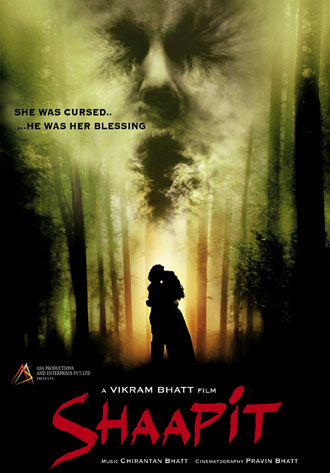
Vikram Bhatt’s Shaapit marks the debut of Aditya Narayan. There is something really irritating about his face. Think that might easily lead to some fear factor. Lets check if it scared the critics or not.

Rajeev Masand (CNN IBN) – Horror films are meant to get your heart racing pumping. At the end of this film, you’ll have to check for your pulse – 1.5/5

Shubhra Gupta (IE) – Bhatt’s `1920’ gave us a ghastly ghost who hung upside down, and a couple of shivery moments. Practically nothing about `Shaapit’, which has the youngest looking debutant hero after Shahid Kapoor, is scary : not the bag of skeletons which floats around a 300 year old castle, not the wailing and the screeching, and the moaning and the groaning – 1/5

Taran Adarsh (Indiafm) – On the whole, SHAAPIT is truly a scary movie, which comes across as a worthy follow up to RAAZ and 1920. If you are a fan of ghost stories, SHAAPIT should be on your list of ‘things to do and watch’ this weekend. Go for it and be prepared to be spooked! – 3.5/5

Gaurav Malani (Indiatimes) – You won’t curse yourself on watching Shaapit . But then again it’s not blessed with anything extraordinary – 2.5/5

Nithya Ramani (Rediff) – There are some genuinely frightening scenes that will make you jump off your seat. Those looking for chills won’t be disappointed – 4/5

Nikhat Kazmi (TOI) – The film works not so much due to its story. Rather, it’s the way Vikram Bhatt tells his story — with a certain polish and pizzazz — that draws you in. Also, it’s Pravin Bhatt’s multi-hued cinematography which adds a lyrical quality to the film – 3/5

And the third release of the week is Lahore. Directed by Sajay Puran Singh Chauhan, it stars Farooque Shaikh, Saurabh Shukla and Sushant Singh.

Shubhra Gupta (IE) – The recently-released `Invictus’ gave us the true story of how Nelson Mandela used rugby to cement ties between blacks and whites in post-apartheid South Africa. `Lahore’ uses another sport–kick-boxing– to suggest how India and Pakistan can come together, but to much less effect – 2/5

Rajeev Masand (CNN IBN) – It’s well-intentioned, has its heart in the right place, and it’s an engaging enough watch. But it never rises above that to become a film that could truly make a difference – 2.5/5

Minty Tejpal (Mumbai Mirror) Lahore is a decent effort, a sports film with a political backdrop, both genres being a relative rarity in Bollywood. However, if it had been 20 minutes shorter, with clearer purpose, less dialogue and tighter direction, Lahore could have been a good film – 2/5

Kaveree Bamzai (India Today) – It’s a film that could have done with less length and more effort to find a better lead. Fewer cliches too. But for anyone who likes the crunching of bones, the slam of fists into each other and the twisting of muscle, go right ahead. Make your day – 2.5/5

Sukanya Verma (Rediff) – Though limited in its story-telling and undistinguished in execution, Lahore redeems itself somewhat by intently playing on the paradox of pacifist intentions realised in the face of a seriously hostile sport – 2.5/5

Nikhat Kazmi (TOI) – Lahore tells a fiery story, gently and lyrically and is embellished with some great cinematography (Neelabh Kaul) and action choreography in the kickboxing sequences (Tony Ching Siu Tung). But most of all, it boasts of a stellar act by the performers with Farouque Sheikh walking away with most of your applause as the genteel Hyderabadi who must train a team of winners, despite political and bureaucratic interference – 3.5/5

Gaurav Malani (Indiatimes) – With a perfectly predictable plotline, if a film still keeps you riveted through its runtime, you know there’s something earnestly right about it. Lahore has a right director. Sanjay Puran Singh Chauhan has the finesse to package the standard story with the requisite action and intensity that a sports film demands – 3/5

Roshmila Bhattacharya (HT) – Even though a Pakistani kickboxer has a hand to play, literally, in the story’s shocking turnaround, there’s no attempt to get into jingoistic spiel or whip up pop patriotism. So Pakistan’s decision to ban the film comes as a surprise. Lahore is not without its flaws but it still leaves you wanting to punch the air! – 3/5

Taran Adarsh (Indiafm) – On the whole, LAHORE is a small little gem that takes you by surprise and catches you completely unaware. The finale in the boxing ring itself is worth the price of the ticket and more. I suggest, you make time for this one – 3.5/5 

Guess its not difficult to figure out whats the film to catch this weekend. Go dope! And if you can, do watch Umesh Kulkarni’s marathi film Vihir.

Now that the post header has made you curious enough to book your tickets, do give the film some time and space. Its not your corn and cola cinema. For that you can wait for pottymaker’s Housefull!

As I returned home after the screening and looked at the bucketful of water in the bathroom and the reflection of the light on its surface, I could not look beyond. A bucketful water never meant so much. Never held my attention. When you go to a theatre to watch a film, its entertainment but when you come back home with a cinema inside you, you know its a masterstroke.

Vihir is one such cinematic masterstroke. Directed by Umesh Kulkrani and written by Girish Kulkarni & Sati Bhave, its devastatingly gorgeous, warm and heartwrenching tale of two freinds and their adolescent days. Of lost and found. Of life and death. Of hide and seek. Of love, lost and longing.

According to the official release, the synopsis of Vihir is as follows…

A story of two adolescent boys Sameer and Nachiket (cousins who are best friends) standing on the crossroads of life… to choose between the life that leads to petty worldly small existence or the life of free existence that would let them spread their wings and soar high in open skies…

They play a game of hide and seek in a rather unusual way. Where one cousin hides in death and the other is looking for him in the life around him. . . . Samir’s search leads him towards the experience of oneness where he can unite with Nachiket again!

Scratch the surface and you will find that the water runs really deep. There is family politics, pain of growing up, existensial crisis, chinese whispers, detachment and finding that “best friend” during one of the most difficult & exciting time of life – adolescent days. When suddenly one day you spot some soft hair strands slowly making a thin line just below your nose, you dont remain the same anymore. You want to talk to someone who belongs to the same club. You try to make sense of the world.

And like me, if you have spent your summer vacations at your nanihaal or mamabadi or mamaghar or Grandma’s place, you will instantly connect with it. Uncles, aunts, cousins, grandparents – all under one roof. Things that you should not have known, tales that you should not have heard and incidents that you should not have been part of – you grow up then and there. You become Adult. Vihir moves in similar territory as Sameer & his Nachiketdada try to decipher the meaning of life around them. They are not only cousins but best friends too. One (Sameer) idolises the other but the other is lost. He is also trying to find himself. And its through one’s loss, that the other discovers himself.

But what kind of loss is it ? Is it just being invisible ? Or more than that. Here comes the maturity in the writing and direction part.  And now slowly all the dots connect. The simple game of hide and seek & chinese whispers dont remain the same anymore. Dont want to write more here to spoil the experience for you.

The character actors are all familar faces of marathi cinema. Lead actors Madan Deodhar (Sameer) & Alok Rajwade (Nachiket) say it more through the silences and gestures than the dialogues. Alok was also the lead in Siddharth Sinha’s FTII diploma film Udhedbun which bagged the Silver Bear at Berlin Film Festival in 2008. Shot gorgeously by Sudheer Palsane, the camera takes you straight inside the family affairs. The acting across the board is so natural that it looks like someone just put a camera there. Am not sure if the actors spent some time together before the shoot or what lead to such strong bond on screen but its pure magic.

When the first half got over, I was bit lost wondering if its the end of the film. And it could have been a superb end there. As i came out and met few other film buffs, realised that others also felt the same. So now what ? What will he do in the second half ? How will he wrap up ?

Fuck Syd Field and fuck all plot points. Umesh Kulkarni’s second half is pure visual delight. Mood piece. At one point, some 20 minutes of the film is complete silence. No dialogues. And once you are with the character, you know what that silence means. If you have ever loved and lost someone, you know its difficult to find a way out.  You dont want to hear people talking. They just dont make sense. You need no gyaan. You need that journey to nowhere. Remember last year’s Dev D ?

In the secod half, I felt the same once again. When “the well” scene comes, I thought here is one more end. But then there is some more. Its a journey of self-discovery. So, no point trying to figure out an end to join the dots. Let it go on.

And as a killer line in Rocket Singh song goes…Uljhe nahi to kaise suljhoge…bikhre nahi to kaise nikhroge. Nobody grows up in years, its always in deeds.

Water is life. And death too. In every drop. Everywhere. The subtle hints, the subtext and the layers – by the end it seems nothing is as simple as it looks.

(PS – Its great that AB Corp produced it. All respect. Hope they do more such films. And those of you who still think that am biased against the Bachchans, doesnt this post say enough to shut you up! We all love to champion a film that we like. Rest doesnt matter. It seems Jaya Bachchan was the key person for making this happen. This surely is one tight slap on the face of Raj Thackeray and his supporters who claimed Guddi buddhi zali, tari ajun akkal nahi aali. And do watch it on big screen. You need to dive into that water. The dark theatre and the big screen sets the perfect mood. )

Click on the play button to see the opening scene of Vihir

For more on Vihir, click here.